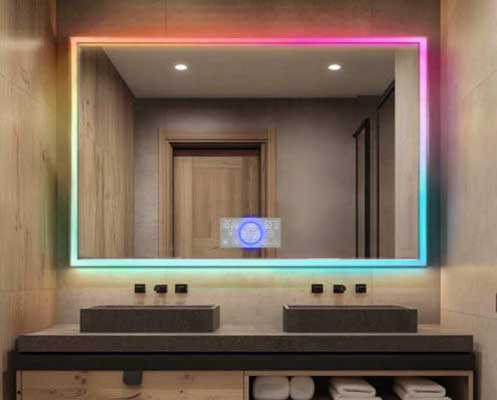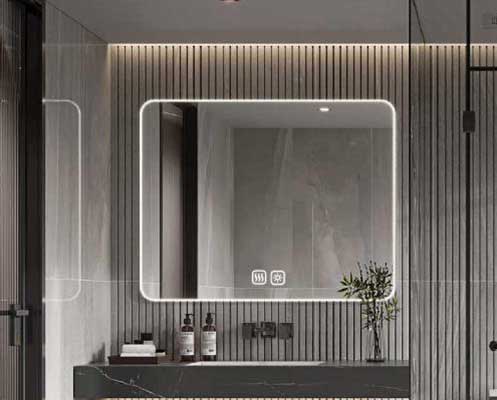
Learn how to choose the perfect bathroom mirror for your space. Expert tips on sizing, shapes, materials, lighting, and smart features for every budget.
1. Why the Bathroom Mirror Matters
A bathroom mirror is not just a piece of glass. It is the hardest-working element in the room.
Think about it. You look into it every morning. You use it to shave, apply makeup, brush your teeth. It sets the tone for the entire space.
A wrong mirror makes the room feel off. A right mirror makes everything click.
This guide walks you through every decision. Size. Shape. Material. Lighting. Features. Budget. By the end, you will know exactly what to buy.
2. Start with Core Functions
Before you look at styles, ask a simple question: what do I need this mirror to do?
2.1 Lighting: Built-in or Separate?
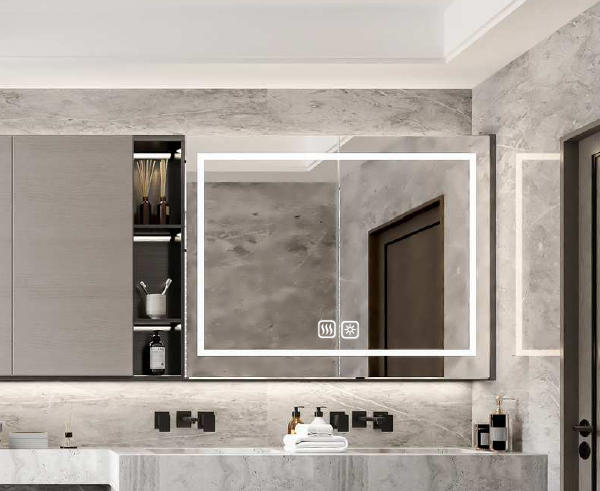
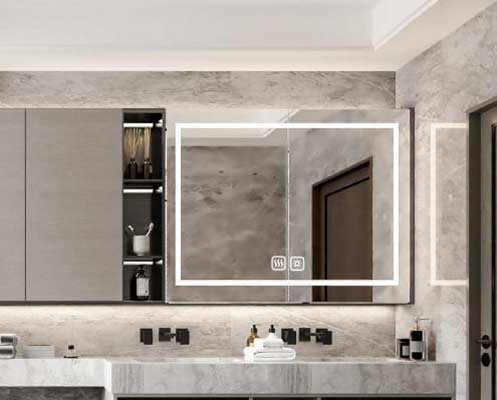
Built-in LED lighting puts light exactly where you need it — at your face. No shadows. No dark spots.
Separate sconces work too. But they must sit at eye level on both sides. Light from above casts shadows under your eyes. Light from behind creates glare.
Pro tip: Vertical sconces on each side of the mirror give the flattest, most useful light.
2.2 Demister: Worth It or Not?
A demister is a thin heating pad behind the glass. It stops steam from fogging the mirror after a hot shower.
Worth it if: you shower before grooming. Multiple people share the bathroom. Ventilation is weak.
Skip it if: you have a large, well-ventilated bathroom. Or you never groom right after showering.
2.3 Storage: Cabinet or Flat?
A mirror cabinet adds hidden storage behind the glass. Great for small bathrooms. It projects 100–150mm from the wall. Check clearance first.
A flat mirror is simpler and slimmer. Choose this if you have storage elsewhere.
2.4 Smart Features: Useful or Novelty?
Color temperature control adjusts light from warm (3000K) to cool (5000K). Useful for makeup vs. general grooming.
Magnification inserts (5x or 7x) help with contact lenses and detail work.
Bluetooth speakers, voice control, displays — most buyers stop using these after a month. Only pay for them if you will truly use them daily.
3. Getting the Size Right
Size is the most common mistake. Too small looks orphaned. Too large looks heavy.
3.1 The 70–80% Rule
Mirror width should be 70–80% of your vanity width.
For round mirrors: 60–70% works better. The circular shape needs less width to feel balanced.
3.2 Standard Size Chart
| Vanity Width | Rectangular Mirror | Round Mirror |
|---|---|---|
| 500mm | 350–400mm | 300–350mm |
| 600mm | 420–480mm | 400–450mm |
| 800mm | 560–640mm | 500–600mm |
| 1000mm | 700–800mm | 600–700mm |
| 1200mm+ | Two mirrors at each basin | Two round mirrors |
Data adapted from Plumbworld sizing guide.
3.3 Height Matters Too
Mirror center should sit at your eye level. For most adults: 1550–1650mm from the floor.
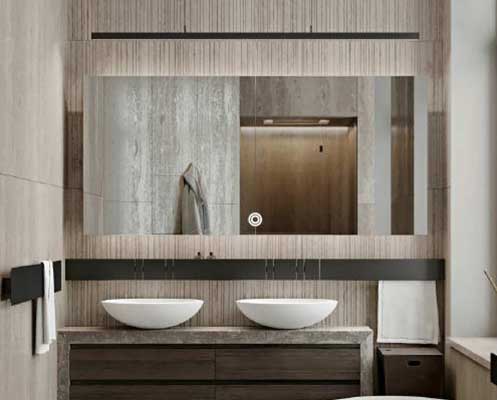
For double vanities: two separate mirrors work better than one wide one. A single wide mirror often looks centered between the basins — not over either one.
4. Shape and Style
Shape sets the room’s visual tone before any other decision.
4.1 Round: The Modern Default
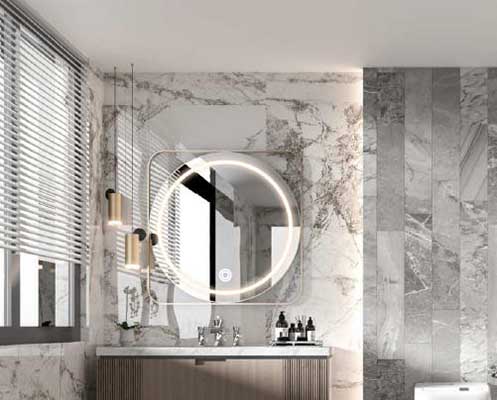
Round softens hard bathroom lines. Tile grids, vanity edges, door frames — all straight. A round mirror breaks that pattern.
Best for: Modern, transitional, and country styles. Any vanity 500mm or wider.
Trade-off: Less reflective surface than a rectangle of the same width.
4.2 Rectangular: Maximum Function
Rectangular gives the most reflection per millimeter. Best for grooming-heavy bathrooms.
Works with any style. Any vanity width.
4.3 Arched: A Statement Shape
An arched mirror is a rectangle with a curved top. It adds height and character.
Best for: Wider vanities (700mm+). Rooms with enough wall height above the vanity.
Caution: If the arch top sits too close to a ceiling or light fixture, it looks forced.
4.4 Pill and Oval: Soft and Narrow
Pill mirrors (elongated ovals) suit narrow vanities. More reflection than round. Softer than rectangle.
Oval mirrors sit between round and rectangular. Good for traditional and Victorian schemes.
5. Materials and Durability
Bathrooms are wet. Steam, splashes, humidity. Your mirror must handle all of it.
5.1 Mirror Quality: Silver vs. Aluminum
Silver mirrors resist oxidation better than aluminum. They last longer in damp rooms.
Aluminum mirrors cost less. But they develop black spots and edge rot faster in humid conditions.
5.2 Edge Protection: The Hidden Weak Point
The edge is where mirrors fail first. Moisture creeps between layers. The reflective backing peels.
Good mirrors have sealed edges. A protective gasket or epoxy edge seal keeps water out.
Look for: Mirrors with sealed or capped edges. Avoid exposed backing.
5.3 Frame Materials
| Frame Type | Best For | Durability |
|---|---|---|
| Matte black metal | Modern bathrooms | Excellent — resists moisture |
| Brushed brass | Warm-modern, period | Good — can tarnish over time |
| Chrome | Traditional | Good — wipes clean easily |
| Frameless/beveled | Minimalist | Good — no frame to corrode |
The coordination rule: Match your mirror frame to your other metal fixtures. Black taps need a black frame. Chrome taps need chrome or frameless. Mismatched metals are the most visible design error in bathrooms.
6. Installation and Height
6.1 Mounting Options
Wall-mounted flat mirror: Simplest. Hangs on brackets or French cleats.
Mirror cabinet: Adds storage. Projects 100–150mm. Check that your wall can support the weight.
Recessed cabinet: Flush with the wall. Requires cutting into the wall. Best for renovations where walls are open.
6.2 The 60-Inch Rule
Mirror center at 60 inches (1524mm) from the floor. That is standard eye level for most adults.
Adjust for your household:
- Taller users: 1600–1700mm
- Children: Lower it slightly, or add a secondary mirror
- Wheelchair users: ADA requires bottom edge no higher than 40 inches (1015mm) above the floor
6.3 Electrical Safety
Hard-wired mirrors (with LED lights or demisters) need a qualified electrician. Plug-in mirrors can be DIY if you have a nearby outlet.
IP rating matters: Zone 2 (within 600mm of water) needs IP44 minimum. Check the spec before buying.
7. Lighting and the Mirror
7.1 Why Lighting Placement Ruins Most Mirrors
Light from above casts shadows under your eyes. Light from behind creates glare. You see a silhouette, not your face.
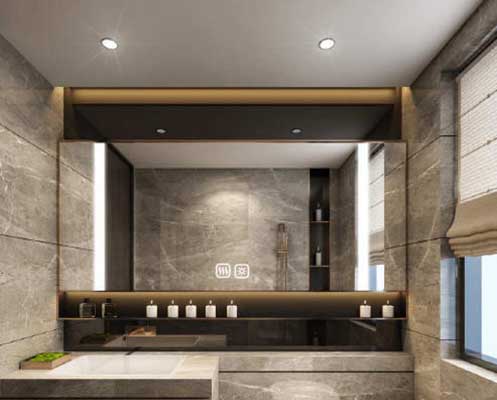
The fix: Light from the sides, at face level. Vertical sconces on both sides. Or a built-in LED frame that wraps around the mirror.
7.2 Color Temperature
3000K (warm): Flattering for skin tone. Good for evening routines.
4000K (neutral): Best for makeup application. Shows true colors.
5000K+ (cool): Clinical. Good for detail work but harsh for daily use.
Best choice: Adjustable temperature. One mirror, multiple settings.
7.3 CRI: The Number Most People Ignore
CRI (Color Rendering Index) measures how accurately light shows colors. Scale is 0–100.
CRI 90+ means colors look true. Makeup looks the same in the bathroom as outdoors.
CRI 80 is common in cheap LEDs. Colors look slightly off.
Look for: CRI 90 or higher on the product spec.
8. Budget and Product Types
| Budget Range | What You Get |
|---|---|
| $50–$150 | Basic flat mirror. Frameless or simple frame. No lighting. |
| $150–$300 | LED mirror with demister. Basic frame options. Good CRI. |
| $300–$600 | Smart mirror. Adjustable color temperature. Premium frame. |
| $600+ | Mirror cabinet with LED, demister, storage. Custom sizes. |
Prices vary by region and retailer. These ranges reflect typical US market options.
Where to save: Shape and frame material. A round frameless mirror costs less than an arched brass one.
Where to spend: Lighting quality (CRI 90+) and edge sealing. These affect daily use and longevity.
9. Common Mistakes to Avoid
Mistake 1: Ignoring lighting placement. The best mirror fails if light hits it wrong. Plan lighting and mirror together.
Mistake 2: Going too small. A mirror under 60% of vanity width looks lost. Follow the 70–80% rule.
Mistake 3: Mismatched metals. Black frame + chrome taps = visual clutter. Coordinate finishes.
Mistake 4: Forgetting the edge seal. Cheap mirrors rot from the edges. Check for sealed edges before buying.
Mistake 5: Skipping the IP rating. A non-rated mirror near the shower is a safety hazard. Check IP44 or higher for wet zones.
10. Quick Buying Checklist
✅ Measure your vanity width. Calculate 70–80% for the mirror.
✅ Decide: round (softening) or rectangular (maximum reflection).
✅ Choose frame finish to match existing metals.
✅ Check edge sealing and backing quality.
✅ Confirm IP rating for your bathroom zone.
✅ Plan lighting: side sconces or built-in LED with CRI 90+.
✅ Consider demister if you shower before grooming.
✅ Set mirror center at 60 inches (adjust for your height).
✅ For cabinets, check wall clearance and support.
✅ Verify warranty and return policy.
FAQ
What is the standard bathroom mirror size?
The standard is 24 inches wide by 36 inches high. But the right size depends on your vanity. Use the 70–80% rule for best results.
Should I get a round or rectangular bathroom mirror?
Round softens modern bathrooms with lots of straight lines. Rectangular gives maximum reflection and suits grooming-heavy use. Both work in any style.
Do I really need a demister?
Only if you shower before grooming or have poor ventilation. In a well-ventilated bathroom where you groom later, you can skip it.
How high should I hang my bathroom mirror?
Center the mirror at 60 inches (1524mm) from the floor. This is eye level for most adults. Adjust for your household’s tallest regular user.
What IP rating does a bathroom mirror need?
For Zone 2 (within 600mm of water), IP44 minimum. For Zone 1 (above the shower), higher ratings may apply. Check local codes.
Can I install a lighted mirror myself?
Plug-in models can be DIY. Hard-wired models need a qualified electrician. Always check local electrical codes.
How do I stop my mirror from rusting?
Choose a silver mirror with sealed edges. Avoid aluminum mirrors in humid bathrooms. Wipe the edges dry after cleaning.
Get Intelligent Control Systems with Zoruiyi
A mirror is only as good as its controls. Zoruiyi builds intelligent control systems for bathroom mirrors — touch switches, hand-wave sensors, and dimming modules. Our components power the features you rely on: demisters, LED lighting, and smart mirror functions. When you choose a mirror with Zoruiyi inside, you get controls that work every time.