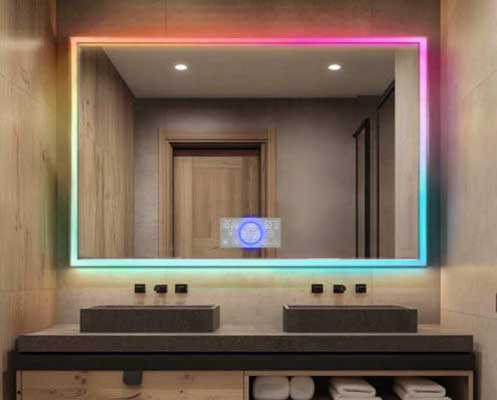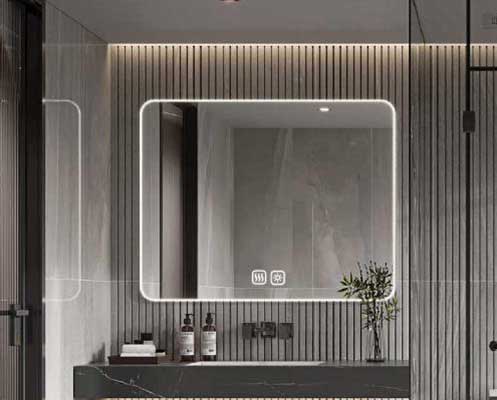
Learn how to choose the perfect bathroom mirror for your space. This step-by-step guide covers sizing, functionality, style, materials, installation, and budget to help you make a smart purchase.
A bathroom mirror is not just a piece of glass on the wall. It shapes how you use the room every morning and how the room feels every time you walk in. The right mirror makes your daily routine easier. It bounces light around the space. It ties your design together. The wrong mirror can make a small bathroom feel cramped or leave you wiping fog off the glass after every shower.
This guide will walk you through the entire selection process. You will learn how to measure for the right size, pick the features you actually need, match the mirror to your style, and install it safely. By the end, you will have a clear checklist to make a confident purchase.
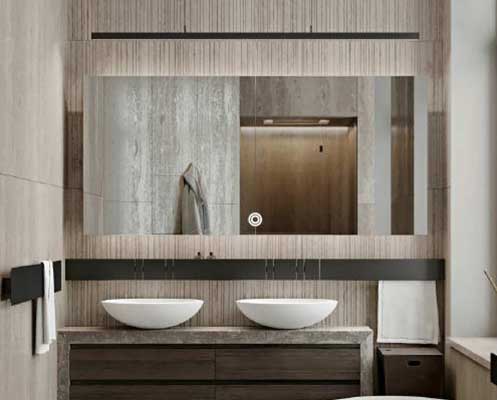
Step 1: Evaluate Your Bathroom Space and Layout
Before you look at any mirror online or in a store, measure your space. Getting the size right is the most important step. A mirror that is too small looks awkward. A mirror that is too large overwhelms the room and can feel oppressive in tight spaces.
Measure Your Vanity Width
The mirror should be proportional to the vanity below it. The standard rule is simple: the mirror width should be 70% to 80% of the vanity width. For a round mirror, aim for 60% to 70% of the vanity width. This proportion keeps the mirror from looking either too heavy or too skimpy above the sink.
Here is a quick reference table based on common vanity sizes:
| Vanity Width | Rectangular Mirror Width | Round Mirror Diameter |
|---|---|---|
| 500mm (compact) | 350–400mm | 300–350mm |
| 600mm (standard) | 420–480mm | 400–450mm |
| 800mm (larger) | 560–640mm | 500–600mm |
| 1000mm (master) | 700–800mm | 600–800mm |
| 1200mm+ (double) | 900–1000mm | Not recommended |
Data source: Plumbworld sizing guide
Check Your Wall Conditions
Not every wall can hold every mirror. You need to know what is behind the drywall. A heavy mirror cabinet or a large glass mirror needs solid mounting. If you can find a stud, use it. If you cannot find a stud, use heavy-duty wall anchors rated for bathroom humidity. Lightweight frameless mirrors can often hang with adhesive clips, but anything with a cabinet or LED wiring needs a more secure approach.
Also, think about what is already on the wall. A tall window above the vanity limits where the mirror can go. A wall sconce on each side of the sink means the mirror cannot be too wide. Plan the space before you fall in love with a specific mirror.
Step 2: Determine Your Core Functional Needs
A bathroom mirror can do far more than reflect. The features you choose should match how you actually use the bathroom. A busy family bathroom has different needs than a guest powder room.
Anti-Fog (Demister) Function
A demister pad is a thin heating element behind the glass. It warms the mirror surface to match the room temperature. This stops condensation from forming after a hot shower. If your bathroom is poorly ventilated or used by multiple people in sequence, a demister is worth the investment. Most demister mirrors activate automatically when you turn on the bathroom light. Some models have a separate touch control for the heating pad.
Built-In Lighting
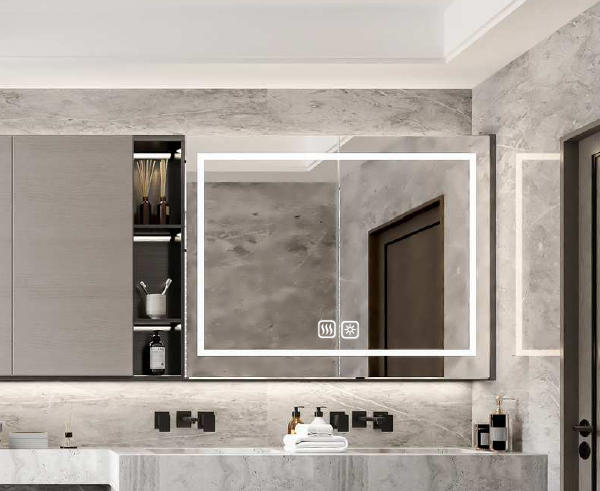
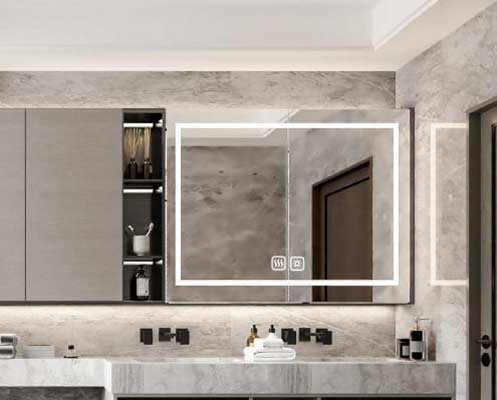
LED lighting around the mirror perimeter provides shadow-free illumination at face level. This is important for tasks like applying makeup, shaving, or inserting contact lenses. Backlit mirrors create a soft ambient glow. Front-lit mirrors give more direct task lighting. If your ceiling light leaves shadows on your face, an illuminated mirror solves that problem.
Storage: Mirror Cabinets
A mirror cabinet hides toiletries behind a mirrored door. This is the best solution for small bathrooms with no floor space for extra storage. Cabinet mirrors add 100mm to 150mm of wall projection, so they take up more depth than a plain mirror. But they turn dead wall space into usable storage. For cloakrooms and compact ensuites, a small mirror cabinet (400mm to 500mm wide) can store soap, hand cream, and daily essentials without any floor footprint.
Smart Features
Some premium mirrors include Bluetooth speakers, voice control, time and temperature displays, or shaver sockets. These features are nice to have, but many buyers find they use them less than expected after the first month. Focus on the core features first: anti-fog, lighting, and storage. Add smart extras only if you know you will use them daily.
Step 3: Choose a Shape and Frame That Matches Your Style
Shape is the most visible design decision. It sets the tone for the whole vanity area. The right shape can soften a boxy bathroom or reinforce clean modern lines.
Common Mirror Shapes and What They Do
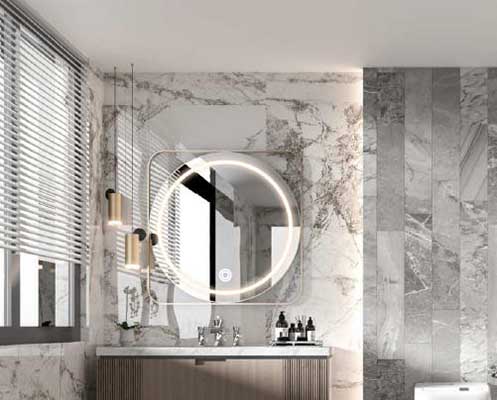
Round mirrors soften rooms with many straight lines. They work well with square tiles, angular brassware, and rectangular vanities. Round mirrors are currently the most popular shape in many markets. However, a round mirror gives less reflective surface than a rectangular mirror of the same width, so it may not be the best choice if you need maximum reflection.
Rectangular mirrors maximize reflective area. They read as substantial and grounded. This is the classic bathroom mirror shape and works in almost any setting.
Arched mirrors add architectural interest. They draw the eye upward and add visual height. They suit classic interiors and spaces with taller ceilings. Just make sure the top of the arch does not sit too close to the ceiling or a light fitting, or the proportions will look forced.
Pill-shaped mirrors (elongated ovals) offer more usable reflection than a round mirror while still feeling softer than a rectangle. They are a strong choice for narrow vanities and small bathrooms.
Oval mirrors draw the eye upward and work well in traditional and Victorian-style bathrooms.
Frame Finish and Coordination
The frame finish is where the mirror joins the rest of the bathroom. The most important rule is this: match your visible metalwork as one family. A black-framed mirror wants matte black taps and matte black vanity handles. Mismatched metalwork is the single most visible bathroom design error.
Here are the main finish options:
- Matte black: The modern default. Pairs with black brassware. Reads as deliberate and contemporary.
- Brushed or polished brass: Pairs with brass taps. Suits Victorian and warm-modern schemes.
- Chrome: The mainstream metal option. Pairs with chrome taps.
- Frameless or bevelled: No frame, or a chamfered glass edge. Suits minimalist bathrooms where the mirror should recede visually.
If your taps are chrome, choose a chrome frame or go frameless. If your taps are matte black, choose a black frame. This single rule will make your bathroom look cohesive and intentional.
Step 4: Consider Material and Durability
Bathrooms are humid environments. The materials in your mirror need to handle moisture without rusting, warping, or degrading over time.
Mirror Glass Quality
Look for mirrors made with copper-free silver backing. This type of backing resists corrosion better than standard silver backing. Quality mirror glass should also meet corrosion testing standards, such as ISO 9227:2012, which tests resistance to salt spray and humidity. A safety film backing is another good feature. This thin PVC film holds the glass together if it breaks, preventing dangerous shards.
Frame Materials
For framed mirrors, the material matters as much as the finish. Aluminum frames are lightweight, rust-resistant, and work well in humid rooms. Treated wood frames can add warmth and character, but they must be sealed properly to prevent warping from moisture. Stainless steel is durable and rust-resistant, though it is less common for residential mirrors. Avoid untreated or raw metal frames that will corrode in a steamy bathroom.
IP Ratings for Electrical Mirrors
If you are buying an illuminated mirror or a mirror cabinet with lights, check the IP (Ingress Protection) rating. The IP rating tells you how well the fixture is protected against water and dust. For bathroom zones 1 and 2 (near water sources), the minimum rating is IP44. Any electrical mirror installed in a bathroom should carry at least this rating. A higher IP rating means better protection.
Step 5: Plan the Installation and Height
Where you hang the mirror determines whether it is comfortable to use every day. Getting this wrong means you will be crouching or standing on tiptoes to see yourself properly.
Standard Mounting Height
The standard rule is that the center of the mirror should be about 60 inches (152 cm) from the floor, or aligned with the eye level of the primary user. In practice, this means the bottom edge of the mirror usually sits 4 to 10 inches above the vanity top.
For accessible bathrooms that comply with ADA standards, the bottom edge of the reflective surface above a lavatory or countertop should be no higher than 40 inches (1015mm) above the finished floor. This ensures that people using wheelchairs can see themselves in the mirror.
Installation Methods
Wall-mounted mirrors are the most common type. They hang on screws or cleats attached to the wall. For heavy mirrors, French cleats distribute the weight more evenly than simple hook hangers.
Recessed mirror cabinets sit inside the wall cavity, leaving the mirrored door flush with the wall surface. This saves floor space and looks very clean. However, it requires cutting into the wall, which is a more involved installation.
Adhesive-mounted mirrors are lightweight and easy to install, but they work best on smooth, non-textured surfaces. They are not suitable for heavy mirror cabinets or anything with wiring.
Hard-wired electrical mirrors should be installed by a qualified electrician. This ensures safety and compliance with local building codes.
Step 6: Style Pairing Tips
The mirror should feel like it belongs in the room. Here are some reliable combinations for common bathroom styles.
Modern and Minimalist
Choose a frameless rectangular or round mirror with a clean edge. For extra functionality, an LED backlit mirror adds a soft glow without adding visual bulk. Matte black or chrome frameless designs work well. Keep the lines simple.
Traditional and Vintage
A brass-framed oval or arched mirror suits Victorian and period bathrooms. The warm metal tone pairs beautifully with classic tile patterns and wood vanities. A beveled edge adds a touch of old-world elegance.
Organic and Soft Modern
Round, oval, or irregular organic-shaped mirrors soften hard tile lines and add a calming flow. This trend has been growing in popularity because curved shapes evoke tranquility and connection to nature. Pair a round mirror with warm wood tones or stone surfaces.
Luxe and Glamorous
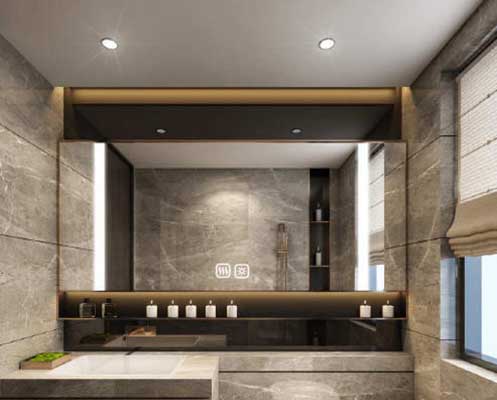
Large rectangular mirrors with LED perimeter lighting create a hotel-like feel. Add a demister and a shaver socket for full functionality. Dark frames (black or bronze) with gold or brass accents in the hardware can create a sophisticated contrast.
Common Mistakes to Avoid
Even careful shoppers make mistakes. Here are the most common ones and how to sidestep them.
Buying the mirror before measuring the wall. Always measure first. A mirror that looks perfect online can be the wrong scale for your space.
Mismatching metal finishes. If your taps are chrome, a brass mirror frame will look accidental, not intentional. Stick to one metal family.
Ignoring the IP rating. An unrated mirror near a shower will corrode or become a safety hazard. Check the IP rating before purchase.
Choosing style over function. A beautiful mirror that fogs up every morning and has no storage becomes a daily annoyance. Balance both.
Forgetting the lighting plan. A plain mirror in a dark bathroom will not solve your grooming needs. If your bathroom lacks natural light, an illuminated mirror is worth the extra cost.
Hanging too high or too low. Test the height before drilling. Have the primary user stand at the vanity and mark where their eye level falls.
Budget Planning and Value
Bathroom mirrors range widely in price. Knowing what drives the cost helps you decide where to spend and where to save.
| Feature Level | Typical Price Range | What You Get |
|---|---|---|
| Basic plain mirror | $30–$80 | Frameless or simple frame, no electrical features |
| Framed designer mirror | $80–$200 | Quality frame, better glass, no electrical |
| LED mirror (no demister) | $150–$350 | Built-in lighting, touch controls |
| LED + demister mirror | $200–$450 | Lighting plus anti-fog heating pad |
| Mirror cabinet with LED + demister | $300–$700 | Storage, lighting, anti-fog, sometimes shaver socket |
| Smart/premium mirror | $500–$1,200+ | Bluetooth, voice control, premium finishes, large sizes |
Price ranges are approximate and vary by market and brand.
The best value for most bathrooms is the LED mirror with demister at the mid-range. It covers the two features that matter most daily: good lighting and a clear reflection after showers. Mirror cabinets are worth the extra cost if storage is tight.
Quick Buying Checklist
Before you buy, run through this list:
- [ ] Measured vanity width and calculated target mirror width (70–80% for rectangular, 60–70% for round)
- [ ] Checked wall conditions and mounting points
- [ ] Decided on core features: demister? LED? storage cabinet?
- [ ] Chosen a shape that complements the room’s lines
- [ ] Selected a frame finish that matches existing metalwork
- [ ] Verified glass quality (copper-free silver backing, safety film)
- [ ] Confirmed IP rating (IP44 minimum for bathroom zones 1 and 2)
- [ ] Planned mounting height (center around 60 inches from floor)
- [ ] Set a budget and identified which features matter most
FAQ
What is the standard size for a bathroom mirror?
The standard bathroom mirror size is 24 inches wide by 36 inches high. However, this is just a baseline. The right size depends on your vanity. Measure your vanity and aim for a mirror that is 70% to 80% of its width.
How high should I hang a bathroom mirror?
The center of the mirror should be about 60 inches (152 cm) from the floor, or aligned with the eye level of the main user. The bottom edge typically sits 4 to 10 inches above the vanity top. For ADA-compliant bathrooms, the bottom edge must be no higher than 40 inches above the floor.
Do I need an anti-fog bathroom mirror?
If your bathroom has poor ventilation or you take hot showers, yes. An anti-fog (demister) mirror uses a heated pad to prevent condensation from forming on the glass. It saves you from wiping the mirror after every shower.
What is the difference between LED and backlit mirrors?
LED mirrors have lighting integrated into or around the mirror. Backlit mirrors are a type of LED mirror where the light source sits behind the glass, creating a halo effect around the perimeter. Both provide better task lighting than a plain mirror.
Can I install a bathroom mirror myself?
A simple wall-mounted plain mirror can be a DIY job if you have the right anchors and tools. However, any mirror with electrical wiring (LED, demister, cabinet lights) should be installed by a qualified electrician. Recessed mirror cabinets also require more involved installation.
What is the best mirror shape for a small bathroom?
A round or pill-shaped mirror works well in small bathrooms. Round mirrors soften the space and take up less visual weight. Pill-shaped mirrors give more usable reflection than round ones while still feeling softer than a rectangle. For very tight spaces, a small round mirror (300–350mm) above a compact vanity looks proportional.
Get Intelligent Control Systems with Zoruiyi
Zoruiyi designs and manufactures intelligent bathroom mirror systems that combine lighting, anti-fog technology, and smart controls into one integrated solution. Our mirrors are built with copper-free silver glass, safety film backing, and IP44-rated electrical components for lasting performance in humid bathrooms. Whether you need a simple LED mirror or a fully featured mirror cabinet with touch controls and adjustable color temperature, Zoruiyi provides reliable hardware and responsive support for residential and commercial projects.